- Zuba Fear
- Posts
- The Last Matinee: Modern Giallo Done Right
The Last Matinee: Modern Giallo Done Right
A Bloody Love Letter To Classic Italian Giallo

Damion Taylor
April 22, 2026
Who doesn't love giallo films? Beautiful synth scores, non-diegetically colored neon lighting, black-gloved killers, and gallons of pinkish-red blood—it's a formula that defined Italian horror for decades. But here's the problem: modern giallo-like films typically miss the mark. The genre seemingly existed within a bubble that's proved nearly impossible to recreate.
Prano Bailey-Bond's Censor and Adam Brooks and Matthew Kennedy's The Editor are rare exceptions—modern films that truly get the giallo formula right. Now, after watching The Last Matinee (Al morir la matinée), I can confidently add a third film to that exclusive list.
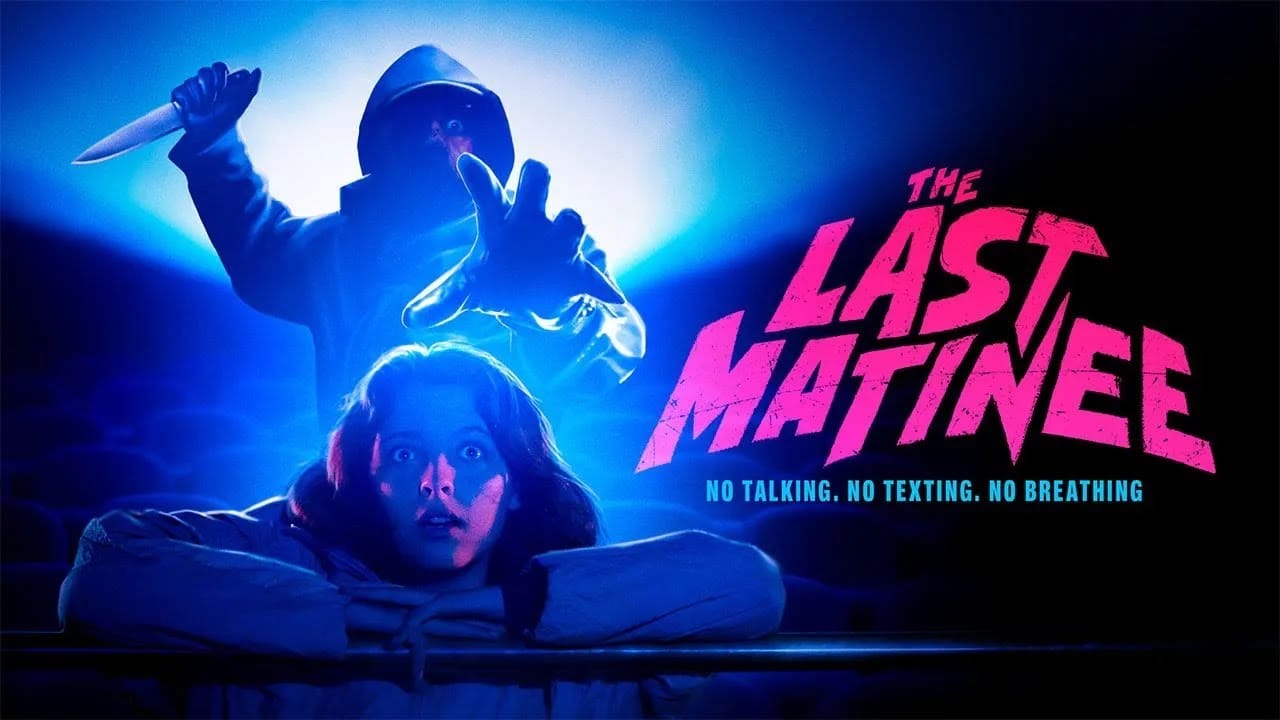
A Night at the Movies Turns Deadly
Ana (Luciana Grasso), a university student, heads to the local theater where her father works as a projectionist. She convinces him to leave early by offering to finish his shift. What none of the theater workers noticed was the black-hooded mystery man (Ricardo Islas) who walked in carrying a bag of killer toys.
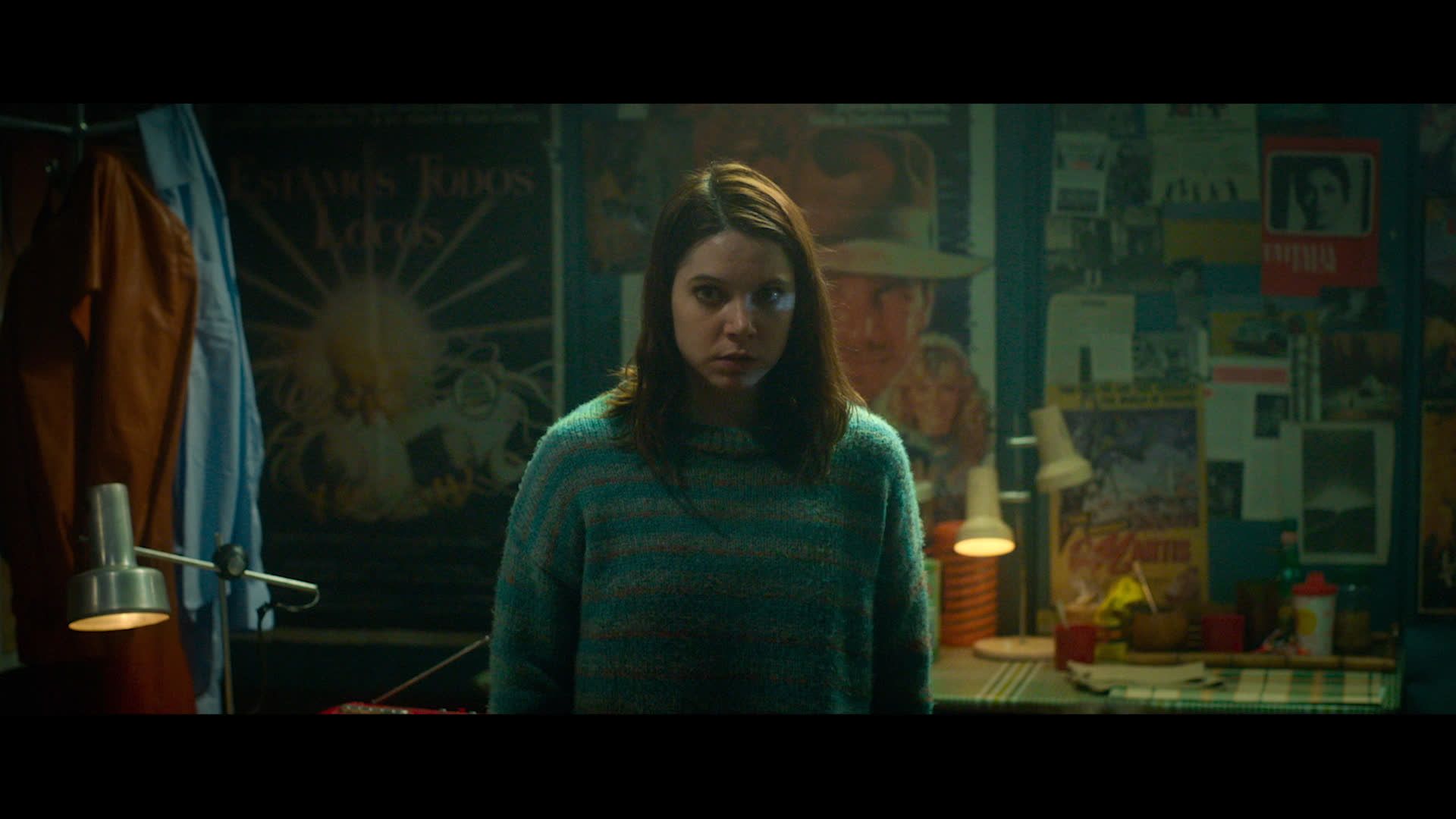
Luciana Grasso as Ana
Three friends, a couple on a first date, a child, and a woman stood up on a date pile into the auditorium to watch Frankenstein: Day of the Beast. But the real beast is already there, lurking in the shadows, picking them off one by one during the screening.
This Uruguay, Mexico, and Argentina co-production comes from writers Manuel Facal and Maximiliano Contenti (who also directed). Here's a delicious meta twist: the film-within-the-film, Frankenstein: Day of the Beast, was created by the eye-eating killer himself, Ricardo Islas. Having the villain create the movie his victims watch? That's inspired.
Why Theater Horror Works So Well
Theaters are an underutilized horror setting, which is bizarre when you think about it. Scream 2, Midnight Movie, Demons, Final Destination 4, All About Evil—you can count theater-based horror films on two hands. Why has this incredible setting been largely ignored? It's perfect for inventive kills and primal fears.
For those of us who frequently attend movies alone (especially in the gun-centric USA), there's genuine discomfort in dark theaters. That rustling behind you. The shadows in your peripheral vision. The vulnerability of being trapped in the dark with strangers. Facal and Contenti's script builds on these fears in an incredibly fun and bloody way.
As someone who can't help looking over their shoulder at every sound during screenings, the premise of a killer lurking in theater shadows, methodically eliminating moviegoers, is bone-chilling. The Last Matinee understands this primal fear and exploits it masterfully.
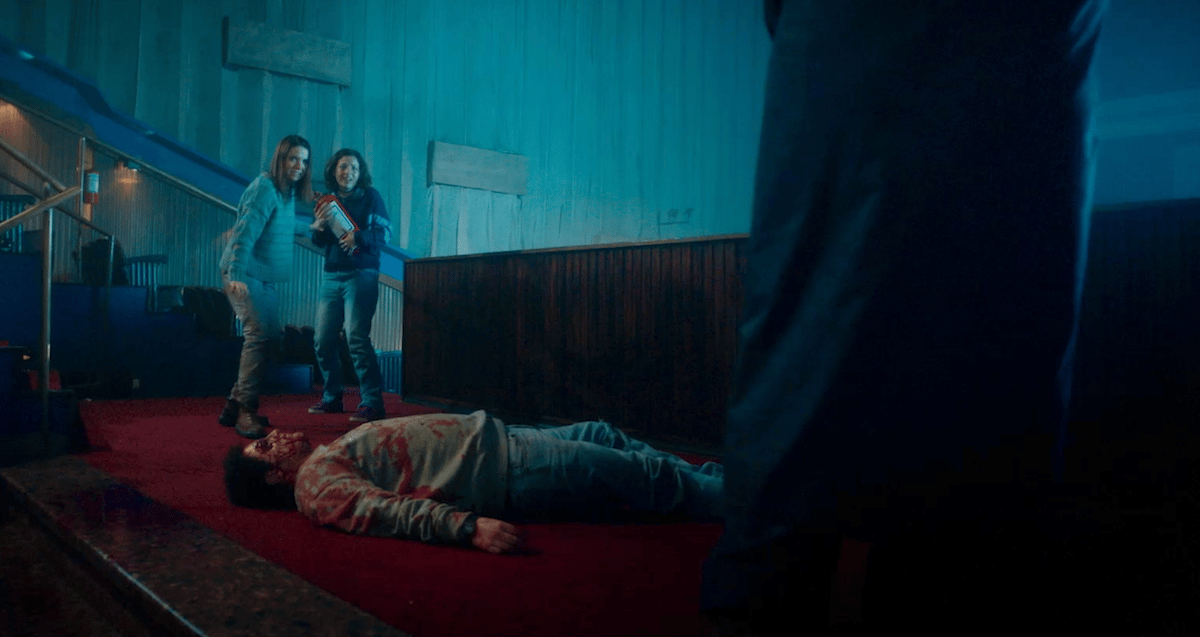
Restrained Violence That Still Packs a Punch
The Last Matinee is surprisingly reserved with its violence—but that doesn't mean it skimps on gore. The kills still pack a punch, even when filmed in the background or obscured by darkness. With both the killer and the kills shrouded in mystery, the film utilizes the "it's not what you see" theory to full effect.
Don't get me wrong: buckets of blood and gross, sinewy kills are wonderful. But there's something equally effective about letting your mind question, "Did I just see that?" Most giallo films are bright, loud, and in-your-face. The Last Matinee breaks those rules and redefines them for a modern audience.
We get scarce information about the killer—he doesn't even have a real name. His backstory lacks clear motive. All we know is he likes eating eye-shaped items. But that ambiguity is intentional and powerful.
Anti-Art Commentary and Symbolism
Censorship was rife within the giallo subgenre, as fascist regimes quickly labeled these films as anti-art. That's where The Last Matinee's true heart shines brightest.
Casting Ricardo Islas as the killer isn't just funny—it's poignant. Having the film's director (within the narrative) killing off people watching his film is a brilliant meta touch. But it's the trophies taken by the killer that provide wealth of meaning.
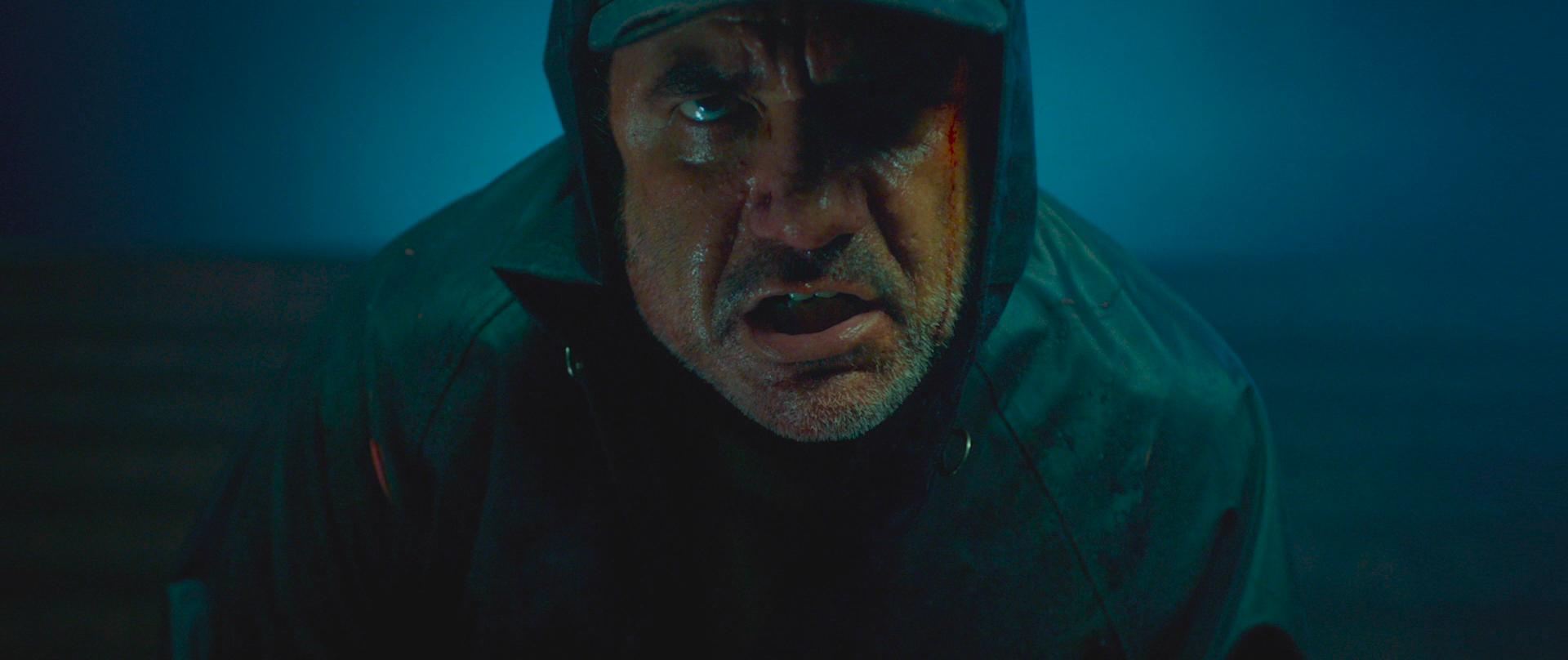
Ricardo Islas
While we don't know why he's killing in a conventional motive sense, we understand his twisted purpose. The killer has something against violent media. His goal: remove the eyes of those who view violent content as penance for the entertainment they consume.
When we glimpse the killer's face, we see he's an older man. Could he be a failed politician who ran on an anti-art platform in the '90s, when such positions lost cultural relevance? Is this his warped revenge against those who consume "vile" art?
The symbolism runs deep. In an era where moral panics about violent media persist, The Last Matinee interrogates our relationship with on-screen violence while gleefully indulging in it. The killer represents censorious impulses taken to horrific extremes—he literally removes people's ability to watch.
A Modern Giallo Gem
The Last Matinee is one hell of a film, and it's criminal it doesn't get more attention. It pops up occasionally on various streamers, but somehow flies under the radar. What a waste of potential viewership!
This is an incredibly fun, well-paced, solidly written whopper of a modern giallo-like film. At a brisk 88 minutes, it doesn't overstay its welcome and knows exactly when to roll credits. No bloat, no unnecessary exposition—just tight, effective horror storytelling.
The film succeeds where so many modern giallo attempts fail because it understands the formula isn't just aesthetics. It's not enough to slap on neon lighting and synthesizers. You need the mystery, the atmosphere, the baroque violence, and the willingness to embrace absurdity while maintaining genuine tension.
The Last Matinee nails all of this while adding its own commentary on film violence, censorship, and the act of watching itself.
Why It Works
Several elements elevate The Last Matinee above typical giallo homages:
The Meta-Narrative: Having the killer create the film-within-the-film adds layers most slashers never attempt. It comments on the relationship between creator, content, and consumer.
The Setting: Theaters are inherently cinematic spaces, and using one for horror creates fascinating recursion—we're watching people watch a movie while being hunted.
Restrained Gore: By not showing everything, the film trusts audiences and creates lingering dread rather than immediate disgust.
Commentary with Teeth: The anti-art subtext isn't heavy-handed, but it's there for viewers who want to engage with it.
Respect for Giallo: The film understands what made classic giallo work and adapts those elements rather than simply copying them.
Essential Viewing
If you love giallo films, The Last Matinee is essential viewing. If you've been disappointed by modern attempts to recapture that magic, this film will restore your faith. If you just want a tight, effective horror movie with inventive kills and genuine atmosphere, you've found it.
At 88 minutes, there's no excuse not to give it a shot. It's exactly the kind of film that reminds you why you love horror in the first place—smart enough to have something to say, but never forgetting its primary job is to entertain and unsettle.
The Last Matinee proves that modern giallo isn't dead. It just needs filmmakers who understand the genre's DNA while bringing fresh perspectives. Facal and Contenti clearly studied the classics, but they also understand what makes horror work in contemporary contexts.
The next time you're scrolling through streaming services looking for something worthwhile, stop when you see The Last Matinee. Don't make the same mistake of passing it by repeatedly. Give it the 88 minutes it deserves.
Just maybe think twice before attending your next late-night movie screening alone. Some fears are too primal to shake, and this film will tap into every single one.
The price of admission might just be death—but the viewing experience is absolutely killer.